How to Use an EpiPen
- What Is an EpiPen and When Is It Used?
- How to Use an EpiPen Auto-Injector (Step by Step)
- Where to Inject an EpiPen
- How to Use an EpiPen on Yourself
- How to Use an EpiPen on Someone Else
- How to Use an EpiPen on a Child
- How Long Does an EpiPen Take to Work?
- How Bad Is It to Use an Expired EpiPen?
- Common Side Effects After Using an EpiPen
- What to Do After Using an EpiPen
- Being Prepared Can Save a Life
- Optimise Your Allergy Awareness With YorkTest
For many people, the idea of using an EpiPen can feel daunting. In a high-stress moment, worrying about doing it wrong or causing harm is completely natural. But when someone is experiencing a severe allergic reaction, acting quickly is vital, and using an EpiPen really can save a life.
An EpiPen delivers adrenaline (epinephrine), the first-line treatment for anaphylaxis, one of the most severe symptoms of an allergic reaction. It works by relaxing the airways, reducing swelling, and helping stabilise blood pressure. Whether you’ve been prescribed an EpiPen yourself, are a parent or carer, or want to be prepared to help someone else, knowing how to use one confidently can make all the difference.
This guide explains how to use an EpiPen safely and correctly, including where to inject it, how to use it on a child, what to do after use, and what to know about expired devices.
What Is an EpiPen and When Is It Used?
Before delving into how you use one, we thought it best to clarify what an EpiPen is. An EpiPen is an adrenaline auto-injector designed to treat severe allergic reactions (anaphylaxis). Anaphylaxis can occur in response to foods, insect stings, medications, or latex, and symptoms can escalate rapidly.
Common signs of anaphylaxis include difficulty breathing, swelling of the lips or throat, dizziness, collapse, severe hives, or vomiting. If anaphylaxis is suspected, adrenaline should be given immediately.
How to Use an EpiPen Auto-Injector (Step by Step)
Knowing these vital steps in advance helps reduce panic in an emergency and ensures injections are carried out efficiently.
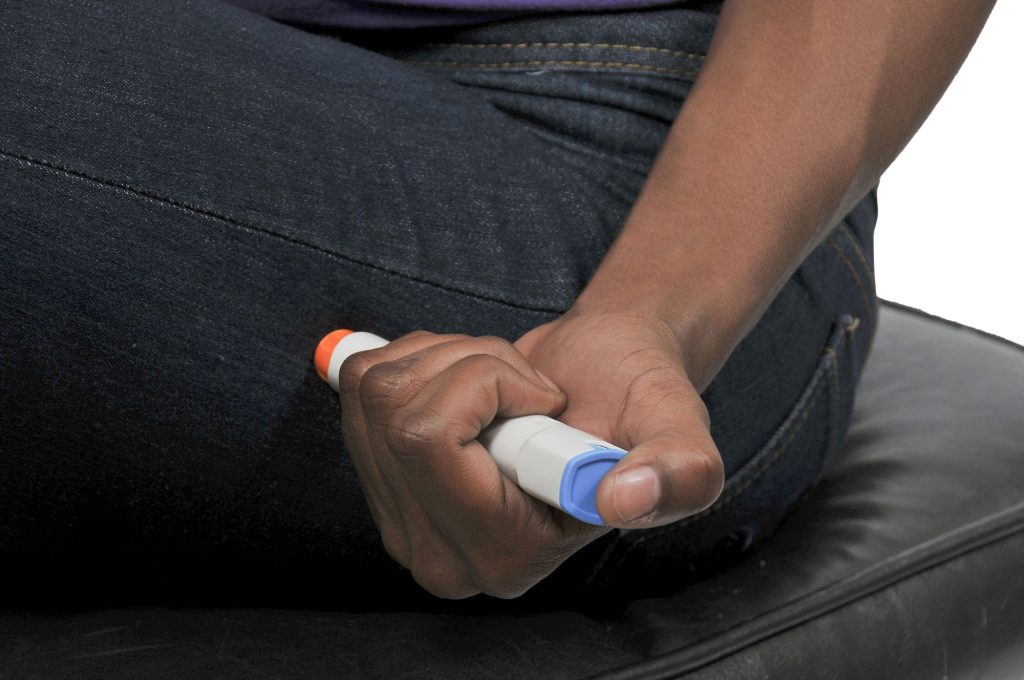
- Remove the EpiPen from its carrier tube
Hold it in your dominant hand with your fist around the device. Keep fingers away from either end. Roughly 10cm away from the orange tip is recommended. - Remove the blue safety cap
Pull off the blue safety cap to activate the injector. - Position the EpiPen correctly
Place the orange tip against the outer mid-thigh. It can be administered through clothing if needed, just avoid the seam in trousers. - Inject
Push the EpiPen firmly into the thigh until you hear or feel a click (you don’t have to press a button or anything like that). This signals that the injection has started. - Hold in place
Keep the EpiPen pressed against the thigh for 3 seconds to ensure the full dose is delivered. - Remove and massage
Remove the device and gently massage the injection site for a few seconds. - Call emergency services
Dial 999 immediately, even if symptoms appear to improve. Further medical treatment and observation are essential.
If you are ever uncertain about which way the EpiPen should go, it can help to remember ‘blue to the sky, orange to the thigh.’ This will help ensure you always have the EpiPen the correct way round.
Where to Inject an EpiPen
The correct injection site is the outer middle part of the thigh. This area allows adrenaline to be absorbed quickly into the bloodstream. Remember to avoid the seam in jeans or trousers, as this could hinder the administrative process.
You should never inject into the buttocks, hands, feet, or veins. These areas increase the risk of injury and reduce effectiveness.
How to Use an EpiPen on Yourself
If you’re having a severe allergic reaction and you can still administer it to yourself:
- Sit or lie down if possible
- Inject the EpiPen into your outer thigh
- Call emergency services immediately
- If symptoms do not improve after 5 minutes and you have a second EpiPen, a second dose may be given
Always let paramedics know the time the EpiPen was administered.
How to Use an EpiPen on Someone Else
If someone else is experiencing anaphylaxis:
- Stay calm and act quickly
- Administer the EpiPen into their outer thigh
- Lay them flat unless breathing is difficult (in which case, allow them to sit upright)
- Call 999 immediately
- Stay with them until help arrives
If they become unconscious and stop breathing, begin CPR if trained.
How to Use an EpiPen on a Child
Children may be prescribed either a junior or standard EpiPen, depending on weight.
Using an EpiPen on a child is very similar to using it on an adult, but there are some extra steps you should consider:
- Keep their leg still during the injection
- Inject into the outer thigh as with adults
- Hold the device firmly in place for the full 3 seconds
- Reassure the child and call emergency services immediately
Schools, nurseries, and carers should be trained and know where EpiPens are stored.
How Long Does an EpiPen Take to Work?
Adrenaline usually begins working within minutes, helping relieve airway swelling and breathing difficulties. However, symptoms can return, which is why emergency medical assessment is always required after use.
How Bad Is It to Use an Expired EpiPen?
Using an expired EpiPen is not ideal, as the adrenaline may be less effective over time. However, in a life-threatening emergency, it is still better to use an expired EpiPen than not to use one at all.
Always:
- Check expiry dates regularly
- Replace EpiPens before they expire
- Store at room temperature and avoid heat or freezing
If you want to ensure you don’t forget your EpiPen expiration date, you can sign up for free expiry alerts via this link.
Common Side Effects After Using an EpiPen
Temporary side effects are common and usually pass quickly. These can include:
- Shaking or tremors
- Rapid heartbeat
- Anxiety or headache
- Dizziness
These effects are far less dangerous than untreated anaphylaxis.
What to Do After Using an EpiPen
After administering an EpiPen:
- Call 999 immediately
- Tell emergency responders that adrenaline has been given
- Go to a hospital for observation, even if symptoms improve
- Do not drive yourself unless absolutely necessary
Anaphylaxis can be biphasic, meaning symptoms may return hours later.
Being Prepared Can Save a Life
Knowing how to use an EpiPen – whether on yourself, a child, or someone else – can feel intimidating, but preparation builds confidence. Taking time to understand the steps before an emergency happens can help you act decisively when it matters most.
If you or your child has allergies, carrying an in-date EpiPen and knowing when and how to use it is a crucial part of staying safe.
Optimise Your Allergy Awareness With YorkTest
If you experience unexplained reactions, hives, swelling, or digestive symptoms after eating certain foods, understanding your triggers is an important step in protecting your health.
YorkTest offers at-home food intolerance and allergy testing, with laboratory analysis and expert support to help you make informed decisions about your wellbeing.
If allergies are impacting your confidence, comfort, or daily life, clarity can make all the difference. Contact us or order one of our tests today.Â