



Skip to content
Save $100!

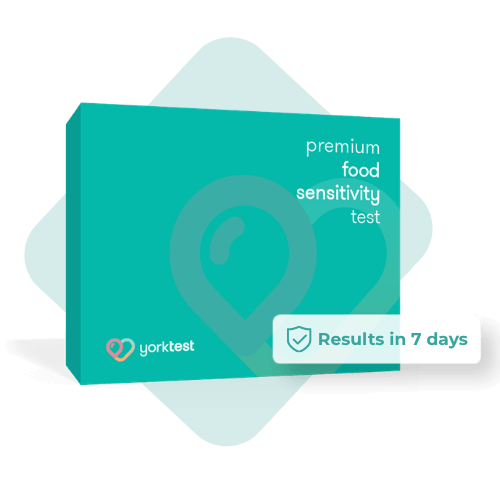
Premium Food Sensitivity Test

Could the foods you eat be causing your symptoms? Find out today.

If you’re experiencing bloating, IBS-type symptoms, brain fog, tiredness or unexplained skin concerns, your diet could be playing a role.

Take our most comprehensive at-home Food Sensitivity Test, measuring your reactivity to over 200 food and drink ingredients. At YorkTest, food sensitivity testing – sometimes also referred to as food intolerance testing – measures food-specific IgG reactivity. Simply take a finger-prick blood sample at home, return it by mail, and receive your results within 7 days, complete with expert nutritional support.


Customers must be aged 18 years or over to take this test. For under 18s, take our
Junior Food Sensitivity Test. This test is not available to customers who are pregnant or breastfeeding.

Original price was: $199.Current price is: $99.

+ Free Delivery
FALL SALE: 50% OFF
Receive expert, accurate IgG Food-Specific analysis from our ISO accredited laboratory

Simple home-to-laboratory finger-prick blood test

Tests for over 200 food and drink ingredients

Tests are HSA and FSA-accepted
Quantity:

+ -

Find the foods that could be triggering your symptoms...

Bloating, IBS-type symptoms, digestive discomfort, fatigue, headaches, brain fog or skin concerns can make every day feel exhausting. Discover how your diet may be affecting your wellbeing with our most comprehensive Food Sensitivity Test, measuring your reactivity to 200 food and drink ingredients.

Comprehensive food sensitivity testing
Unlike other tests on the market, we measure all four subtypes of food-specific IgG (1-4) compared to some which test only for IgG4. This is important as it ensures all of the different food-specific IgG reactions are detected.

Receive expert nutritional guidance
Taking a test can help you take control of your overall wellbeing. You’ll gain valuable insight into the food and drink ingredients your body may be reacting to. A Nutritional Support Guide is provided with your results, and we offer discounted rates for 1-to-1 support with our expert Nutritional Therapists.

Simple. Quick. Reliable.
Simply collect your finger-prick blood sample at home, return it to our ISO-accredited laboratory by mail, and receive your personalised results in as little as 7 days.

How would it feel to finally have the answers?

Imagine enjoying your meals without worrying about bloating afterwards.

Gain valuable insight into how your diet may be affecting your wellbeing, without the frustration of relying on guesswork.

Understanding

which foods may be directly impacting your symptoms

Being able to make changes

with confidence instead of trial and error

Supporting you

to feel healthier, happier and enjoy spending time with family and friends

Feeling empowered

with personalised information about your body

How it works

Collect your sample at home – simple finger-prick

Send it to our laboratory – using the prepaid packaging provided

Receive your test results – access your personalised report through your secure online Wellness Hub account. It takes approximately 7 days to receive your test results

Book a consultation – Schedule a consultation with one of our qualified Nutritional Therapist experts to review your results and explore your recommended next steps

What’s in your testing kit?

What’s In Your Food Sensitivity Testing Kit

Your food sensitivity test starts and ends its journey at our in-house laboratory. By placing your order, dispatching your kit and processing your blood sample all in one place, we fully safeguard the stability and security of your sample.

  • A return envelope 
  • Two single-use lancets
  • One absorbent wand
  • One adhesive plaster
  • A cleansing wipe

What you will receive

Your easy-to-understand report includes:

Personalised Food Reactivity Report – – View your antibody reactivity to over 200 food and drink ingredients, ranked from highest to lowest. Each ingredient includes your igG reactivity level and result value, making it easy for you and your Nutritional Therapist to identify High, Borderline and Normal reactions, helping you make informed dietary changes based on your personalised results.

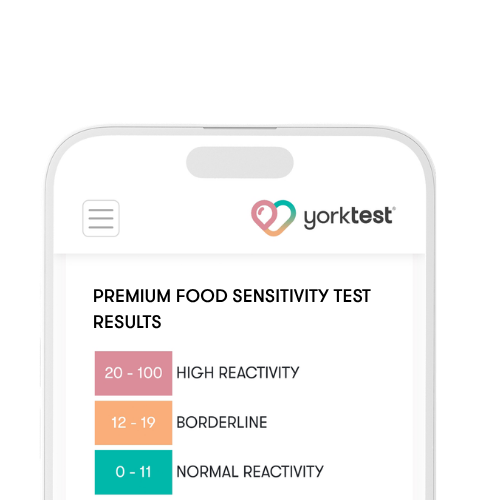
Easy-to-Understand Traffic Light Results - – Each ingredient is categorised as High (red), Borderline (yellow) or Normal reactivity (green), making your results simple to interpret.

Practical Dietary Guidance - – Receive clear, easy-to-understand information to help you understand your results, identify potential trigger foods and make informed dietary choices. You also receive a free Nutritional Support Guide with your test results, which helps further explain your results and guides you through the Food Elimination and Re-introduction Diet process, if appropriate.

Expert Nutritional Support – – Access qualified nutritional therapist support to help you interpret your results and plan your next steps.

Secure Wellness Hub Access – – Access your digital report online whenever you need it.

Man looking at his phone

What your results help with?

Identifying potential trigger foods.

Discover foods and drinks that may be contributing to your symptoms, helping you make more informed dietary choices.

Understanding your antibody reactivity.

See your personalised IgG reactivity levels for over 200 food and drink ingredients using easy-to-understand traffic light categories.

Supporting dietary changes.

Use your results to make informed adjustments to your diet and help manage symptoms such as bloating, digestive discomfort and fatigue.

Making confident food choices.

Gain personalised insights to help you choose foods that better suit your individual needs and lifestyle.

Monitoring your progress.

Track how dietary changes affect your symptoms over time and support your long-term wellbeing.

Accessing expert guidance.

Receive personalised guidance from our qualified Nutritional Therapists to help you understand your results and plan your next steps.

Reducing the guesswork.

Take a more informed approach to your diet with personalised insights based on your individual results.

Supporting long-term wellbeing.

Use your results as part of a personalised approach to supporting your overall health and wellbeing.

1-1 Nutritional Therapist Support

Get even more from your results with expert support. Book a 30-minute consultation to speak with one of our qualified Nutritional Therapists. They’ll help you understand your report, explain what your results mean, identify potential trigger foods, and provide personalised dietary and lifestyle recommendations tailored to your symptoms, goals and individual needs.

A nutritional therapist at a table with a clipboard

What We Test For

  • Almond
  • Beef
  • Coffee
  • Cow’s Milk
  • Egg White
  • Egg Yolk
  • Gluten (Gliadin)
  • Oat
  • Peanut
  • Pork
  • Tea
  • Wheat
  • Yeast
  • Acai Berry
  • Coffee
  • Cow’s Milk
  • Dandelion Root/Burdock Root
  • Ginseng
  • Goat’s Milk
  • Cabernet Sauvignon
  • Chardonnay
  • Concord
  • Chenin Blanc
  • Malbec
  • Merlot
  • Pinot Noir
  • Riesling
  • Sauvignon Blanc
  • Syrah/Shiraz
  • White Zinfandel/ Red Zinfandel Mix
  • Green Tea
  • Hibiscus
  • Nettle
  • Rooibos
  • Sheep’s Milk
  • Tea
  • Abalone/Cuttlefish
  • Anchovy
  • Crustacean Mix
  • Eel
  • Mollusc Mix
  • Oily Fish Mix
  • Plaice/Sole
  • Salmon/Trout
  • Sardines
  • Tuna
  • Vendace
  • White Fish Mix
  • Apple
  • Apricot
  • Avocado
  • Banana
  • Bilberry
  • Blackberry
  • Blackcurrant
  • Cherry
  • Cloudberry
  • Coconut
  • Cranberry
  • Cucumber
  • Grape
  • Grapefruit
  • Kiwi
  • Lemon
  • Lime
  • Lingonberry
  • Lychee
  • Mango
  • Melon Mix
  • Mulberry
  • Olive
  • Orange
  • Papaya
  • Peach
  • Pear
  • Pineapple
  • Plantain
  • Pomegranate
  • Prune
  • Pumpkin
  • Raspberry
  • Strawberry
  • Tamarind
  • Tomato
  • Barley/Malt
  • Corn (Maize)
  • Dinkel Flour
  • Gluten (Gliadin)
  • Hops
  • Millet
  • Oat
  • Quinoa
  • Rice
  • Rye
  • Wheat
  • Wheatgrass
  • Agar Agar
  • Anise Seed
  • Cassia
  • Cardamom/Bay Leaf
  • Chilli Pepper
  • Cinnamon/Clove
  • Coriander/Cumin/Dill
  • Curry Leaves/Curry Powder
  • Garlic
  • Ginger
  • Jasmine
  • Juniper berry
  • Lemongrass
  • Mint Mix
  • Mustard Seed
  • Nutmeg/Peppercorn
  • Peppers (Capsicum)/Paprika
  • Parsley
  • Turmeric
  • Beef
  • Chicken
  • Duck
  • Goat
  • Lamb
  • Pheasant
  • Pork
  • Turkey
  • Almond
  • Aloe Vera
  • Bamboo
  • Brazil Nut
  • Carob
  • Cashew Nut
  • Chia Seed
  • Chickpea
  • Cocoa Bean
  • Cola Nut
  • Flax/Linseed
  • Hazelnut
  • Hemp
  • Lotus Root
  • Okra
  • Peanut
  • Rocket (Arugula)
  • Sesame Seed
  • Seaweed
  • Spirulina
  • Sunflower Seed
  • Tamarind
  • Walnut
  • Asparagus
  • Eggplant
  • Bean sprouts
  • Beetroot
  • Bok choi
  • Carrot
  • Celery
  • Haricot Bean
  • Kidney Bean
  • Lentils
  • Lettuce
  • Mushroom
  • Mustard Mix
  • Onion
  • Parsnip
  • Pea
  • Peppers (Capsicum)
  • Potato
  • Rhubarb
  • Soybean
  • Spinach
  • String Bean
  • Swede
  • Sweet Potato
  • Turnip
  • Water Chestnut

Crustacean Mix

– Crab

– Lobster

– Prawn

– Shrimp

Melon Mix

– Watermelon

– Honeydew

– Cantaloupe

Mint Mix

– Mint

– Sage

– Basil

– Thyme

Mollusc Mix

– Mussel

– Oyster

– Scallop

Mustard Mix

– Broccoli

– Brussel Sprouts

– Cabbage

– Cauliflower

Oily Fish Mix

– Herring

– Mackerel

White Fish Mix

– Cod

– Haddock

Food Sensitivity Test FAQs

If you want to know what might be causing symptoms such as IBS, headaches, bloating or tiredness, then a food sensitivity test could help. Food intolerances can develop at any time.

At YorkTest, we define food sensitivity – sometimes also referred to as food intolerance testing – and food intolerance testing, as looking for any food-specific IgG reactions in the body. IgG is an antibody called Immunoglobulin G.

It’s a little bit different from food allergy testing, which searches for a different antibody response that causes an allergic reaction.

Our at home food sensitivity tests check to see how your immune system reacts to different food groups, looking for those IgG reactions.

Every test is different but at YorkTest, we analyze IgG reactions to 200 food and drink ingredients. With so much data, you might be surprised to learn which foods trigger your immune system’s response – while groups such as dairy and wheat are commonly known, the foods you react to could be fruit, fish, or even that herb that you can’t resist adding to every dish.

Once you’ve taken a food sensitivity test, you’ll be able to understand which types of food cause your body to have an adverse immune response, triggering uncomfortable symptoms such as nausea or gas.

We send out a kit to collect your sample, before running tests in our laboratory to get the results.

It’s easy to take the test. Once you place your order, we’ll mail a kit out to your address, along with its instructions. We’ll aim to mail the kit  either the same day or the next working day.

In each kit, you’ll find a cleansing wipe for your finger, two lancets (single-use), an absorbent wand, a secure container for the wand. Use the kit to gently prick your finger to collect a blood sample – the process is little more than a scratch, we promise!

Your sample can be registered on our Wellness Hub, and just send it back to us in the mail.

When we receive your test, we get to analyzing and processing it in our laboratories. As part of our food intolerance testing, we search for any food-specific IgG reactions in the body – IgG is an antibody called Immunoglobulin G, and it can show when your body is responding adversely to a substance, which can result in uncomfortable symptoms.

Your results will be available through our Wellness Hub, along with guidance to help you take back control of your health and wellbeing. You will then be able to book a consultation with a qualified Nutritional Therapist.

At YorkTest, we define food sensitivity, and food intolerance testing, as looking for any food-specific IgG reactions in the body. IgG is an antibody called Immunoglobulin G. After collecting your sample, we run tests in our laboratory to see which foods are causing any IgG reactions.

The reproducibility rate of our tests is over 98%. This means that when we take the same person’s sample and run the same tests, the results will correlate with each other more than 98% of the time.

We test for all four subtypes of IgG, analyzing your sample for reactions to 200 food and drink ingredients. This reduces the risk of any reaction being missed.

As well as being highly accurate, you can have peace of mind when reading the results of your food sensitivity test, knowing that so many foods have been tested.

Depending on your personal food fingerprint, you could be sensitive to pretty much anything from chickpeas to beef – this is why taking a food sensitivity test is so important to help you identify the cause and help reduce the symptoms. However, there are certain products that are more common on the results of our food intolerance test reports for our customers. You can view the full range of what we test for in the section above.

According to Very Well Health, here are a number of commonly-identified food sensitivities:

Gluten: Used in many baked goods, and is also in lots of sauces and gravies. Being sensitive to gluten is different to having celiac disease, which is a lifelong autoimmune condition. Learn more about what gluten is and why it is bad for some people over on our blog.

Nuts: Being sensitive to nuts doesn’t necessarily mean you are allergic to them. Allergies can often cause very severe reactions so it’s important to take a specific food allergy test to identify any risk.

Nut sensitivity symptoms can still be uncomfortable, and according to our research, can also take up to 72 hours to show. Lots of people experience peanut sensitivities specifically – which are technically classified as legumes or tree nuts – but you could have an intolerance to nuts as well.

Dairy: Symptoms can flare when the body doesn’t have enough lactase (an enzyme) to digest the sugar from lactose found in dairy products. The food-specific IgG test does not test for lactose intolerance, but it does test for reactions to a product called casein also makes dairy hard to digest and can lead to food sensitivity symptoms.

If you love coffee but have a dairy intolerance, there are lots of dairy-free alternatives to milk to choose from. However, many people also are sensitive to the proteins in the caffeinated drink, so it’s good to take a test before eliminating anything from your diet.

High FODMAP foods: FODMAPs are a group of carbohydrates: fermentable oligosaccharides, disaccharides, monosaccharides and polyols.

High FODMAP foods can be harder for your body to digest, which can lead to discomfort such as bloating. Research has shown that eliminating triggering FODMAPs from your diet can help with alleviating IBS symptoms.

We listed some high FODMAP foods and low FODMAP alternatives on our blog.

Food sensitivities can cause a wide range of uncomfortable symptoms.

Because food intolerances are linked to your gut health, many people know that if they’re suffering from digestive complaints or even nausea then they might be sensitive to certain foods. However, the list of symptoms is much longer.

Lots of people will experience joint pain due to their lifestyle or simply growing older. But it could also be due to a food sensitivity, exacerbated by your body’s immune system targeting your joints and causing them to swell.

Other aches and pains such as regular migraines or headaches could also be triggered by specific foods – as well as food intolerance testing, it’s important to seek advice from your medical practitioner to rule out any underlying conditions.

Fatigue and tiredness could also be caused by dips in energy levels caused by specific foods. Food intolerances can sometimes make it more difficult to maintain a healthy weight too

Conditions such as eczema and asthma are caused by an overactive immune system. Identifying your specific food triggers using a food sensitivity test could help to manage the immune response and reduce the symptoms. Even if you have less severe skin irritation or respiratory problems, knowing the food triggers can help you to avoid them.

Anxiety and depression are complex mental health conditions and you should always seek help from a medical practitioner. As part of your treatment, understanding what foods cause uncomfortable symptoms could impact your daily wellbeing. We explain more about the science of the role diet has on mood in our blog post.

If you regularly experience symptoms such as stomach cramps, headaches, nausea, tiredness or uncomfortable, itchy skin, then a food trigger could be the cause.

Anyone suffering from any of these complaints can take this at home food sensitivity test. It’s a simple way to try and identify which types of food could be linked to your body’s reactions.

Our test analyzes IgG reactions to 200 food and drink ingredients. With this information, you can start to eliminate those foods from your diet to try and reduce the risk of discomfort.

All of our customers have the option to add on a 30-minute consultation with one of our nutritional therapists after receiving the results so that they can discuss the best way to refine their diet using their specific food fingerprint.

Our main food sensitivity test is designed for individuals aged 18 and over. However, we do have a wider range of food intolerance testing for children aged 2-17 years old, and offer a parent and child testing package to help your whole family.

Severe food sensitivity symptoms can also be due to underlying medical conditions – so always consult with your medical practitioner. Our information is intended to provide nutritional advice for dietary optimization.

We don’t advise anyone who is pregnant or breastfeeding to take a test and then embark on a restricted diet, due to the specific nutritional needs of your body at this time.

Restricted dieting to eliminate food sensitivity triggers could increase the risk of developing or worsening disordered eating behavior. If you’re suffering or recovering from any kind of eating disorder, our test might not be suitable. Always consult with your medical practitioner before taking a test.

It’s important to remember that a food allergy and a food sensitivity are different things. At YorkTest, we also refer to a food sensitivity as a food intolerance.

To identify food intolerances, our food sensitivity tests analyze each sample for any food-specific IgG reactions in the body. IgG is an antibody called Immunoglobulin G. Food allergies, on the other hand, are caused by IgE, or Immunoglobulin E reactions

Food allergies are more rare than food sensitivities – less than 10% of adults and children have a food allergy, but it is estimated that 45% of the population have some kind of food sensitivity.

However, allergic symptoms are also often much more severe. Once the body has been exposed to food it’s allergic to, reactions can happen immediately. Food sensitivity reactions tend to take place up to 72 hours after consumption.

You might have stomach pains, bloating, constipation or diarrhea, including IBS, immediately after eating, or headaches or migraines. Some people experience itchiness after eating foods such as dairy, or a flare-up of existing conditions such as eczema or psoriasis, while some suffer unexplained fatigue or low mood.

Symptoms usually occur not long after eating but their duration depends on a number of factors.

They may last a few hours then subside as long as you don’t eat any more of the food you’re intolerant to. However, symptoms can persist for weeks and even months if you continue to eat the food regularly and in larger quantities.

People with intolerances don’t always know exactly which ingredient(s) affect them so they might feel tired or bloated, or suffer from itchy skin all the time. They sometimes have a good idea of what’s causing their discomfort but a food sensitivity test provides greater certainty, enabling them to cut out foods that could cause an adverse reaction.

Food sensitivities can emerge in childhood and, as with adults, more usually cause stomach pain, bloating and diarrhea. They may grow out of their intolerances or it could be a life-long condition.

Growing numbers of adults today have a suspected or confirmed food intolerance. Some have had it their whole life but didn’t know the symptoms they were experiencing were caused by eating particular foods, while others developed digestive sensitivities later on.

Gluten (mainly wheat and barley) and lactose (milk) are often the cause of their sensitivity, and there are a number of theories behind this. It could be that, as we age, our bodies find it more difficult to produce the enzymes that enable us to break down proteins such as lactose. The food-specific IgG test will determine whether there is a sensitivity to dairy (milk) but will not show up reactions to milk sugar (lactose).

Modern food processing methods have been blamed too. For instance, people with a yeast intolerance may suffer a reaction to mass-produced baked goods containing baker’s yeast but are able to eat naturally-fermented sourdough with no ill effects.

While stress isn’t thought to cause food intolerances, it could be a trigger. Sensitivities you’ve had all your life may only become noticeable when experiencing stress later in life. Symptoms for stress and food intolerances can be similar – itchy skin, bloating, headaches and so on – so always speak to a medical practitioner if you’re concerned.

We aim to make the testing and results process as straightforward as possible, while still giving you all the information you need to take control of your health.

Once you’ve sent us your sample, our in-house team of experts will analyze and test it for intolerances. The results are sent to you securely so you receive them within seven days. Contained within your own Wellness Hub is an easy-to-understand explanation of your results, including a traffic light-style guide and specific reactivity values that represent the level of any intolerances. We can also provide nutritional advice and insights to help you adapt your diet if needed.

An elimination diet is recommended for anyone with suspected food sensitivities – but identifying the proteins that cause an adverse reaction isn’t always easy. You may suffer bloating after eating bread for example, but is gluten or yeast to blame? Other less common triggers, such as carrots, lentils and almonds, can sometimes be missed too.

Elimination diets are hard to stick to, and you may end up unnecessarily cutting out nutrients that benefit your health, or foods that you enjoy.

It takes around three months to complete the elimination phase and then you have to introduce foods slowly, carefully noting down any reactions. But testing beforehand means you already have a good idea of what you’re sensitive to. Using our traffic light system, where red indicates high reactivity and green normal reactivity, you’ll be able to see which food to cut out and include first.

When you get your results, you can also book a consultation with one of our nutritionists who’ll help you to interpret them, advise on eating plans, offer alternatives to replace trigger foods and help ensure you’re still enjoying your food, even if you’re on an elimination diet.

Medical tests and treatments can add up, which is why many Americans have a Flexible Spending Account (FSA) or Health Savings Account (HSA) in place, allowing them to make pre-tax savings to put towards medical expenses.

Since YorkTest’s Premium Food Sensitivity Test is typically considered a qualified medical expense, it is covered under most plans so you should be able to use your savings as payment.

Food sensitivity tests help you to identify digestive problems that could be causing discomfort and pain and address them with dietary changes. A qualified medical expense is defined as the cost of a treatment, cure, diagnosis, mitigation or prevention of a disease, which is why our tests might be included. However, it’s always worth checking with your provider before making a purchase.

For more details, click here.

If you require more information on the HSA/FSA scheme, you can read the following article https://www.forbes.com/advisor/taxes/healthcare-fsa-vs-hsa/

With so many food sensitivity tests on the market, how do you choose the right one for you?

It goes without saying that accuracy is key, otherwise you may continue eating foods that cause symptom flare-ups or cut them out unnecessarily.

YorkTest has been supporting people for 40 years, and has stringent testing and quality control processes in place. Today, we have a more than 98% reproducibility rate, which means two different results of the same person’s sample will correlate with each other more than 98% of the time.

We use a unique wand system which ensures the sample is protected and stable during transit. Testing is carried out by trained, qualified scientists at our in-house laboratory, and every sample has a unique number allowing us to track it and ensure confidentiality.

All our equipment is fully maintained and calibrated to ensure the accuracy of your results, and we use the latest IT systems to manage our lab processes. Only when we’re completely satisfied with the results and process are they sent to you.

Our scientific expertise informs everything we do, from the design and manufacture of blood collection kits to the development, manufacturing and quality control of the food-specific IgG enzyme-linked immunosorbent assay (ELISA) tests, and results approval.

Many companies claim they can identify food intolerances from a hair sample – however, their claims are unfounded by science.

Not only are ineffective hair tests a waste of money, a false positive might mean you cut out food that is nutritious and that you enjoy, while a false negative could lead you to continue eating food that causes pain and discomfort.

IgG is a type of antibody – immune response – sometimes formed when people react to certain foods. It’s a key indicator of sensitivity and is only found in blood, not hair samples.

Like all our home testing kits, the YorkTest Premium Food Sensitivity Test is easy-to-use and you’ll only feel a slight scratch or pinch when taking your sample, so don’t worry if you’re nervous about needles. All samples are processed by fully-trained and qualified scientists in our state-of-the-art labs, so you can be confident your result is highly accurate. This is what sets YorkTest apart from other home test providers, including some who test for IgG antibodies.

You might see them used interchangeably but a food allergy is not the same as a food intolerance or sensitivity, as we explore in further detail in this article. Food intolerances are far more common than allergies – food allergies affect less than 10% of people whereas intolerances affect around 45%.

Food allergies are caused by IgE (immunoglobulin E) responses, whereas food intolerances are caused by IgG (immunoglobulin G) reactions.

They’re both types of antibodies, released when our body perceives a particular protein to be a threat. However, while an allergic (IgE) reaction to an allergen is almost immediate, it can take around 72 hours for food sensitivity symptoms to appear after eating. In addition to a food sensitivity test, we also offer a food allergy test, which can help you identify IgE reactions to 23 common foods

Case Studies

“Extremely helpful. I feel much happier and healthier.”

Christopher Parrish

Symptoms Underlying issues, stomach issues

Read More
Christopher Parrish profile

“Life changing”

Victoria

Symptoms Bloating, stomach cramps, urgent bowel movements

Read More
Victoria

“I couldn’t imagine going back to the life I had before this test! I’m so relieved I did it. You only get one body, so you need to look after it, and I’m so glad I made the decision to look after mine”

Eleanor Newton

Symptoms stomach aches, bloating, gas, headaches, brain fog

Read More
Eleanor Newton

“I feel relieved to know about my food allergies and sensitivities, as now I know what was wrong.”

Susan Moffat

Symptoms Ibs, fatigue

Read More
Susan Moffat

“I feel lighter, with more energy and much happier not having to live with constant pain. I would like more people with my rare autoimmune condition to be able to take the test.”

Alison Wrigglesworth

Symptoms Fatigue, aches, pains

Read More
Alison Wrigglesworth

Why Choose Us

The Proven Experts

We have over 40 years of experience in food sensitivity & allergy testing and have published research in the field. More than half a million tests have been processed in our very own accredited, in-house laboratory.

Quality, accuracy & expertise

We have an over 98% reproducibility rate. Every single test result is checked by our Quality Control specialists before release. Results are made available on your secure, personal Wellness Hub account within 7 days.

5-Star Aftercare

89% of YorkTest customers would recommend us to a friend – we have a referral scheme for those that do! We provide guidance on your results, not just scores. Our dedicated customer service team are available via phone and email.

Qualified Nutritional Therapists

You can choose to book a 30-min Nutritional Therapist Consultation for follow-up support on recommended food swaps and next steps. We have an experienced team of qualified, NANP-registered practitioners.